

 Kerala Police
 Student Police Cadet
 FAERI
FAERI
Building Kerala's Next Generation of Technology-Ready Cadets
The Federation of Aerospace Engineers and Robotics Innovations (FAERI) has launched a dedicated technology training programme for Student Police Cadets (SPC) in Kerala. Delivered in association with the Kerala Police SPC project, the programme brings advanced, hands-on engineering education directly into SPC units at their own schools.
The Student Police Cadet project already shapes disciplined, socially responsible young citizens through civic training, drill, and community service. FAERI's programme adds a powerful new dimension to that foundation — practical technical capability. Cadets move from theory to build-and-fly, from watching to operating, and from curiosity to genuine engineering skill.
Across seven technology domains — aerospace, robotics, drones, artificial intelligence, RC cars, RC planes and ham radio — cadets learn tools that matter both to modern policing and to their own futures. Every module is designed to run alongside the existing SPC calendar without disrupting academics. Learn more about the federation behind this mission on our About Us page.
Hands-on training that connects discipline with engineering — built on FAERI's mission, vision and objectives.
Seven Technology Domains, One Cadet Journey
Each domain is taught through building, testing and flying real hardware — never through slides alone.
Aerospace Engineering
How and why things fly — taught with models cadets build and launch themselves.
- Principles of flight: lift, drag, thrust, weight
- Aerofoil shapes and control surfaces
- Model rocketry and safe launch practice
- Introduction to satellites and space missions
Robotics & Automation
From a bare microcontroller to a robot that senses its surroundings and acts on them.
- Sensors, actuators and motor drivers
- Microcontroller programming basics
- Line-following and obstacle-avoiding bots
- Team build challenges and demonstrations
Drone Technology
Building, calibrating and safely flying unmanned aircraft — with the rules that govern them.
- Drone anatomy, assembly and calibration
- Flight controllers, GPS and telemetry
- DGCA regulations and safe-flying discipline
- Aerial survey, search and disaster-response uses
Artificial Intelligence
Demystifying AI — what it can do, how it learns, and where human judgement must stay in charge.
- What machine learning actually is
- Computer vision and image recognition demos
- Training a simple model on real data
- AI ethics, bias and responsible use
RC Cars
The fastest, most tangible way to understand drivetrains, control loops and radio links.
- Chassis, suspension and drivetrain assembly
- Brushless motors and electronic speed controllers
- Transmitter binding and channel setup
- Time-trial and precision-handling challenges
RC Planes
Cadets build a fixed-wing aircraft, trim it, and take it to the field for real flights.
- Wing design, balance and centre of gravity
- Airframe construction and servo linkages
- Pre-flight checks and trimming
- Supervised flight sessions with instructors
Ham Radio
Amateur radio — the communication skill that keeps working when every other network fails.
- Radio wave propagation and antenna basics
- Operating procedure, callsigns and Q-codes
- Emergency and disaster communication drills
- Guidance towards WPC amateur licence exams
What a Session Looks Like
The kind of hands-on work cadets take on across the seven domains.
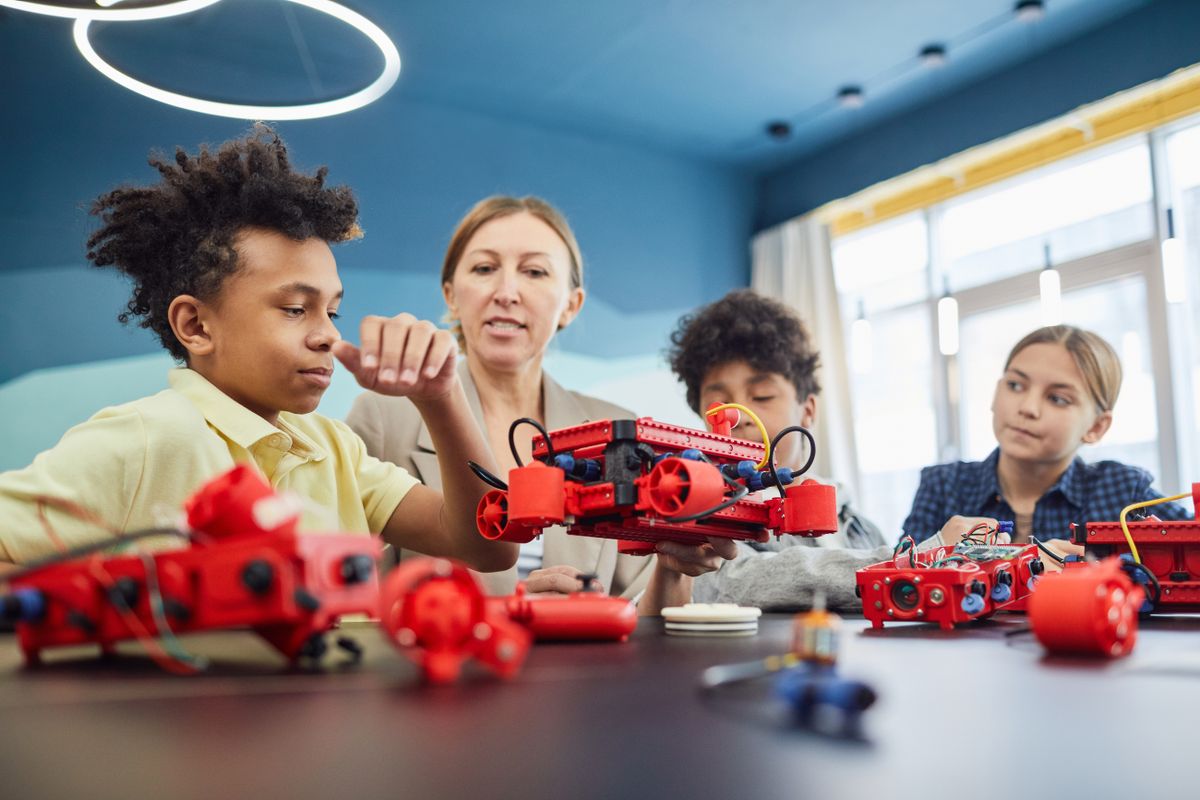
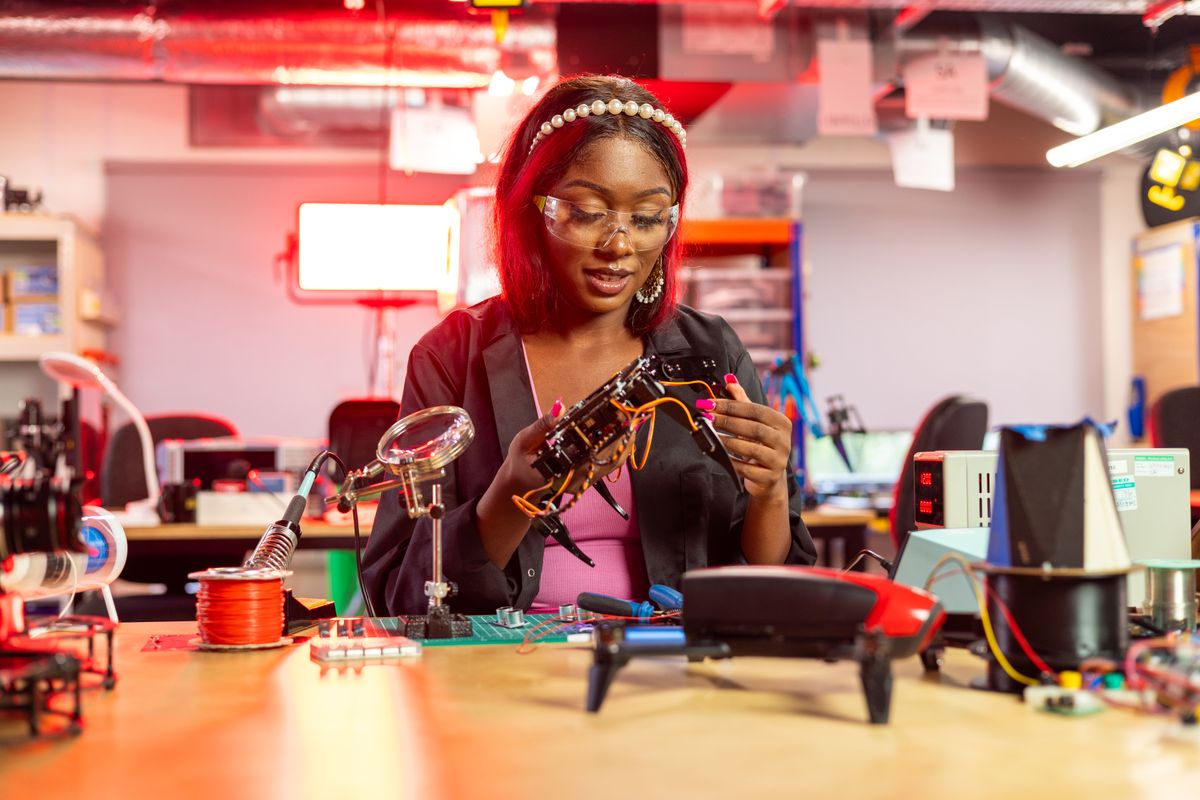
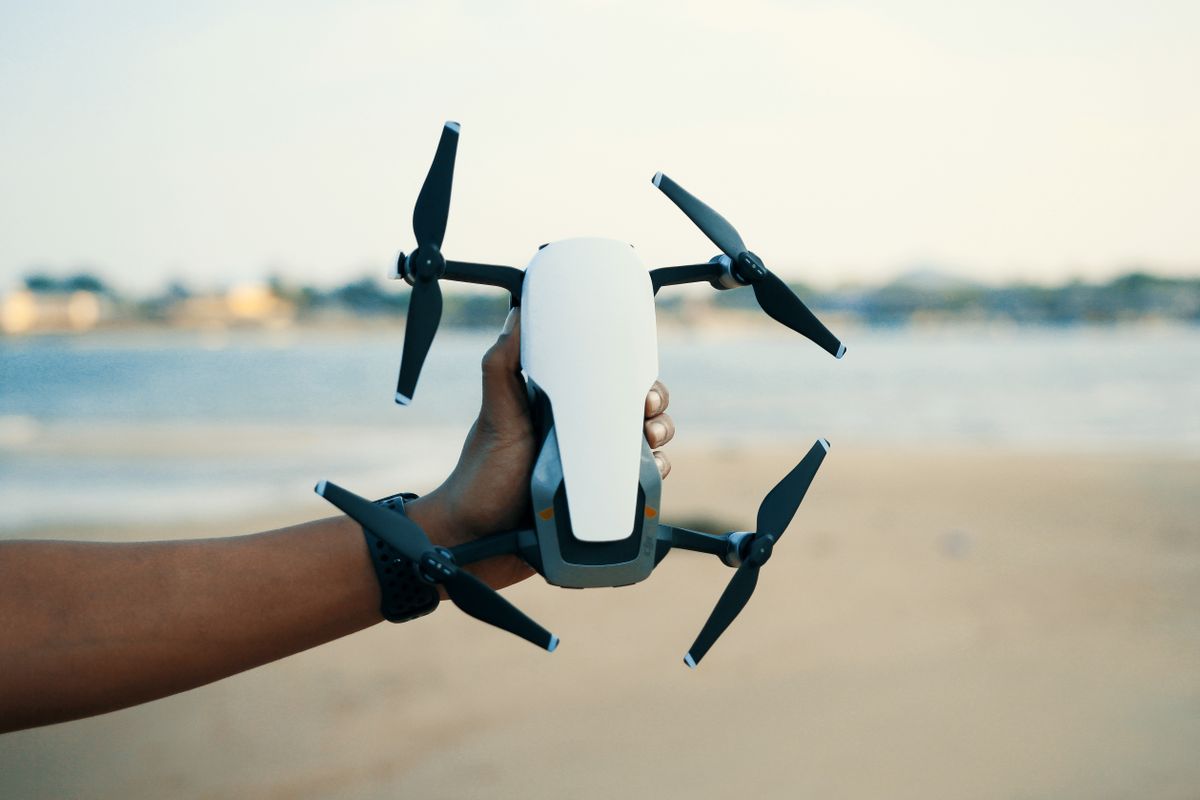
Images are illustrative of programme activities and do not depict specific SPC units or sessions.
A Four-Stage Journey for Every Cadet Unit
Structured to fit the existing SPC calendar, with no disruption to regular academics.
Orientation
An introductory session at the SPC unit covering all seven domains, live demonstrations, and a safety briefing for cadets and teachers.
Hands-On Modules
Cadets work in small teams through each domain with FAERI kits and mentors — building, wiring, coding and testing at every step.
Field Sessions
Outdoor flying and operating sessions for drones, RC planes and RC cars, plus live ham radio contacts under qualified supervision.
Showcase & Certification
Each unit presents a team project at a district-level showcase, and participating cadets receive FAERI certificates of completion.
Discipline Meets Engineering Capability
The SPC project already teaches cadets to lead, to serve and to act responsibly under pressure. FAERI's programme gives those same cadets the technical skills that increasingly define modern public service — from operating a drone over a flood-hit village to keeping a community connected when the mobile network goes down.
Cadets leave the programme with practical competence, a portfolio of things they have actually built, and a clear line of sight into careers in aerospace, robotics and technology. For many, it is the first time engineering stops being a textbook subject and becomes something they can do with their own hands. Explore our wider school initiative at the Aerospace Engineering & Robotics Innovation Lab.
We Learn To Serve. Now We Learn To Build.
Every Student Police Cadet already knows what it means to stand up for their community. This programme puts the tools in their hands — a drone flying over a flood-hit village, a radio link that holds when the towers fall silent, a machine built from nothing but curiosity and a set of instructions.
Six Things Every Cadet Takes Home
Not notes. Not slides. Real machines they built, tested and made work.
A Drone They Can Fly
Assembled, calibrated and flown by their own hands — then landed on a marker they chose.
A Robot That Decides
A bot that reads its surroundings through sensors and changes course without being told.
An Aircraft That Leaves the Ground
A fixed-wing plane built from bare airframe to first flight, trimmed and launched on an open field.
A Voice Across the District
Their first live amateur radio contact — the skill that still works when every network is down.
An AI That Recognises
A model they trained themselves, watching it learn to tell one thing from another.
A Machine Built to Race
An RC car tuned for speed and control, run against the clock and against their own best time.
From Cadet to Innovator
The skills learned in these sessions are the entry point to some of the most demanding and rewarding fields in India today.
Aerospace & Space
India's space and aviation sector — from national research organisations to a fast-growing private launch and satellite industry.
Defence & Public Safety
Technology roles across defence research, policing and emergency services, where drones and secure communication now matter every day.
Robotics & AI
Automation, machine learning and intelligent systems — the fastest-expanding engineering field of this decade.
The Drone Economy
Certified pilots, aerial survey, precision agriculture and inspection work — an industry India is building right now.
Engineering Education
A genuine head start for engineering entrance exams and degree programmes — with hands-on experience most applicants simply do not have.
Disaster Response
Kerala knows what floods cost. Cadets trained in drones and emergency radio become genuinely useful when it matters most.
Bring This Programme to Your SPC Unit
School authorities, Community Police Officers and SPC coordinators can reach the FAERI programme team directly.